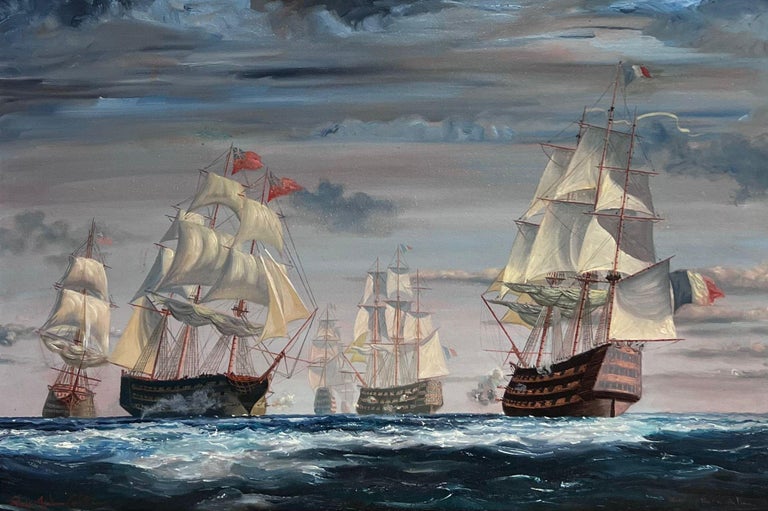
Let’s learn about the anatomy of a sailing ship
Before answering the questions below, let’s do some documentation by watching the following two videos!
How a 16th century explorers’ ship works
(author: Jacob O’Neal, Animagraffs, 41 minutes, but I guarantee you it’s very interesting)
And for the later phases of colonial expansion, when the British Empire reached the acme of its expanse, here’s…
How an 18the century battleship works (HMS Victory)
HMS (=His Majesty’s Ship) Victory was the largest sailing ship the British ever built. It was the command ship that admiral commanded during the victory at Trafalgar against the Spanish powerful Armada (learn more about the Battle of Trafalgar from the Royal Museums Greenwich).
(author: Jacob O’Neal, Animagraff, 25 minutes’ worth your time)
Now let’s recapitulate what you have just learned with on a couple of static images:
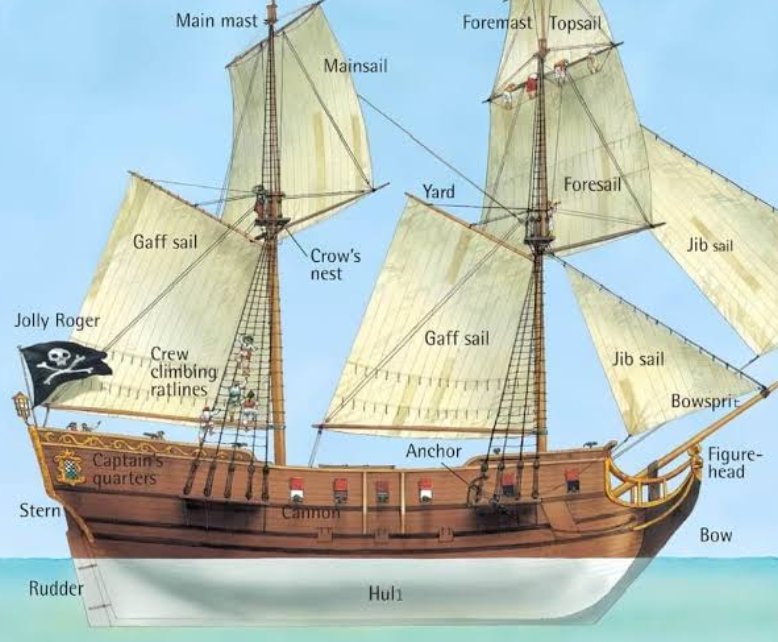
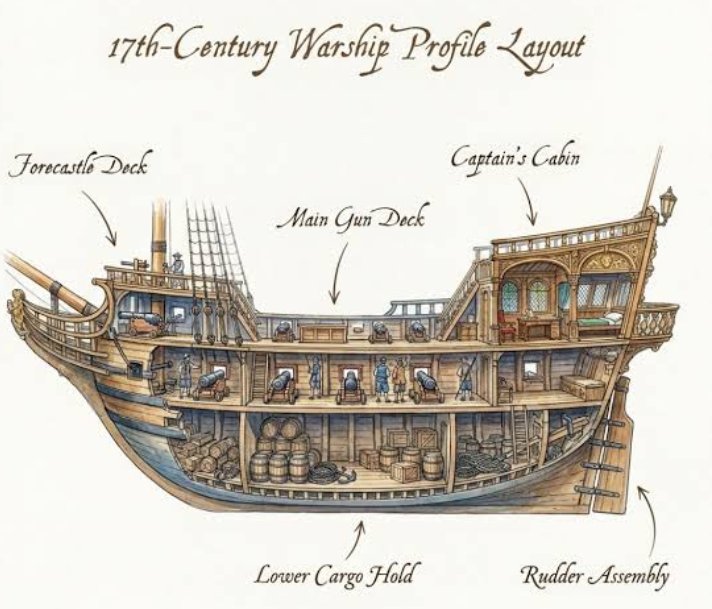
Questions about sailing ships
Now pick up a question from those below. Remember to follow the RULES FOR SEMINARS!
Answers are to be given orally in class in 90 seconds. If you found some interesting images you may post the link to their page in the comments. (Do not try to copy the image in the comments, they are not accepted!)
- C1. Where did the officers sleep and eat? Was this different from the common sailors? Was there a class discrimination?
- C2. How many people were needed to maneouvre a canon? Was this a dangerous operation? (this could use images / screen captures)
- C3. How was hygiene respected on the ship? How were toilets, showers..? (this could use images / screen captures)
- C4. How were the sick and wounded treated? Was there a ship hospital? (this absolutely requires images / screen captures)
- C5. Sometimes anchors had to go to a great depth. Where did the very long rope for that go? How thick was it? (this absolutely requires images / screen captures)
- C6. You remember from films the sailor perched (cocoțați) on the mast (catarg). How was his place called? How did he go up there? At what height was he perched?
- C7. Present two types of sails (vele) (common name, slang name). How are those called in Romanian? What is their function?
- C8. Present two types of masts (catarge) (common name, slang name). How are those called in Romanian? What is their function?
Remember: there are other questions for you on the A list and B list.